
Serving Lucas, Ottawa, Sandusky and Wood Counties
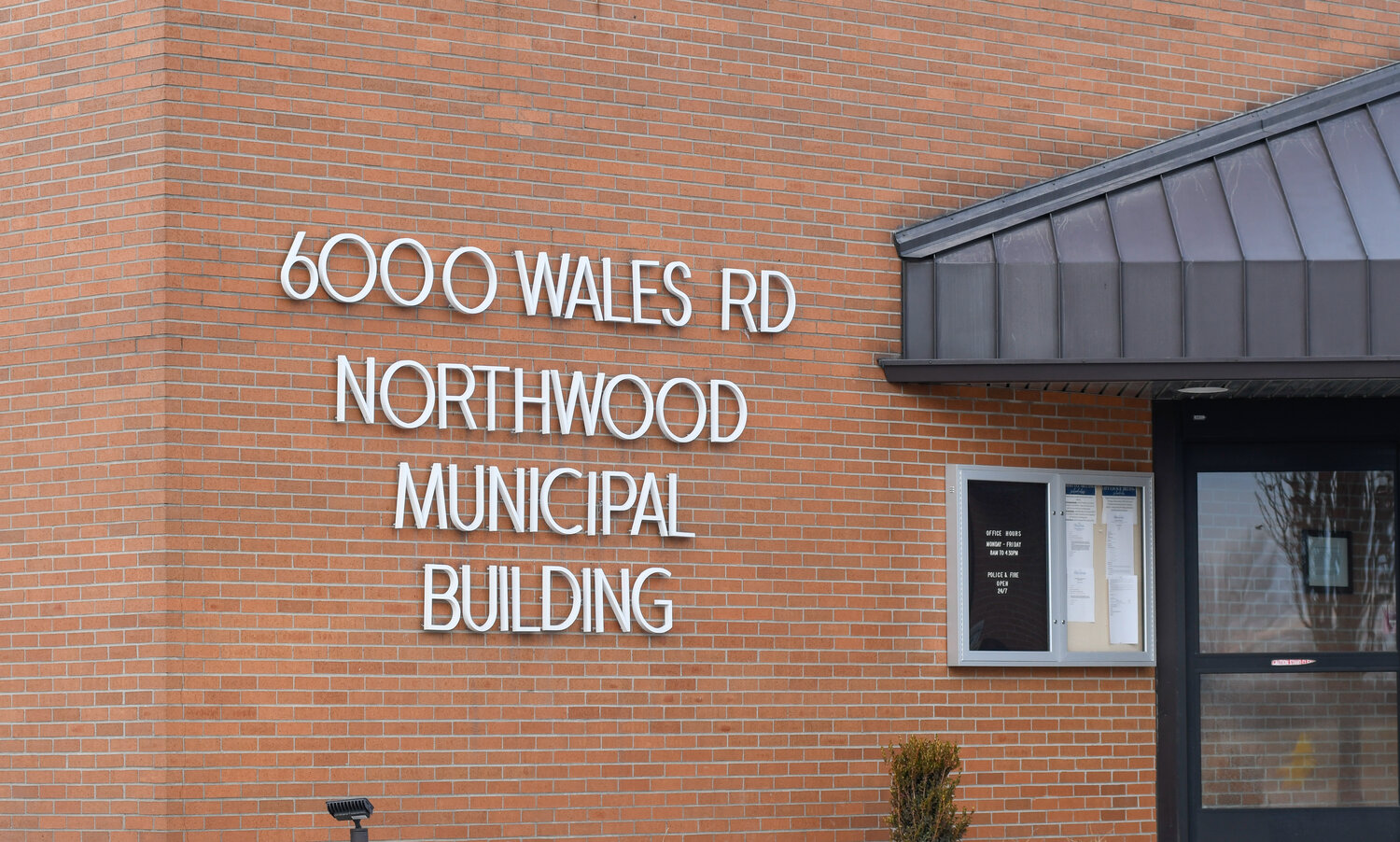
Officials in Northwood and Perrysburg Township are discussing a potential Joint Economic Development District (JEDD), and discussions are said to be in the early stages.
A JEDD is an arrangement in Ohio where one or more municipalities and a township agree to work together to develop township land for commercial or industrial purposes. Perrysburg Township officials, like many township officials around the state, are in search mode for potential funding sources after discussions at the state level about eliminating property taxes have gained steam.
As the law currently stands, townships cannot collect income taxes, so property taxes are their main funding source. That’s where a potential JEDD comes into place locally.
“It’s in reaction to a number of threads, primarily with proposed changes coming out of the General Assembly in Columbus with regard to property taxes,” Northwood’s city administrator, Kevin Laughlin, said. “There are some potential changes to what can be collected, how it can be collected, inside millage, and those sorts of things that are still kind of in play in Columbus.
“That's making a lot of our colleagues in neighboring townships pretty nervous, because townships generate their revenue almost entirely from property taxes — whether that's a fire millage, police or safety, some of them have it for roads or kind of all across the board. Any potential changes to property taxes coming from the state or the electorate obviously concern townships greatly.”
Northwood and Perrysburg Township would identify an area of land to include in the JEDD that is adjacent to both and issue an income tax in that land at a rate typically reflecting the associated municipality, or Northwood in this case, which currently has a 1.5 percent income tax.
It would apply to businesses and the people working within the JEDD. Depending on the percentage split agreed to, should it fully form, each entity would be able to pull in additional income tax revenue. And Northwood wouldn’t have to annex the land to do so.
“A lot of times you'll see JEDDs formed when maybe the township is looking at a large employer or developer or something like that, and there are costs associated with running a sewer line or something like that,” Laughlin said. “And the city controls the sewer, the township doesn't have sewers, and how we work together to get to this big development project that could potentially benefit both of us. But it's really services in general, so anything from zoning, police, fire, safety, paramedics, to water, sewer, to any services that a city could potentially offer or provide to a township can be part of the agreement.
“It's primarily economic developmentally driven, and it's location specific. So say there was a large employer that wants to come to a township, and they were like, ‘Hey, this is kind of on our outskirts, we can't really provide fire protection,’ or ‘The drive time from our fire station is too much for us to safely service this particular factory.’ The township and the neighboring city could then enter into a JEDD agreement, which would typically include a non-annexation clause.
“The city would guarantee not to annex the area for three, five, ten years (or whatever length), and then the rest of the agreement is how the proceeds of the income tax are shared between the township and the city. It can be straight 50-50. You know, you take your half, we take our half, everybody's happy. In a lot of them, you'll see like a 40-40 split, so 40 (percent) to the township, 40 to the municipality. And then they can keep 20 percent for any infrastructural or service improvement that would go directly to that particular JEDD district.”
In terms of area finances, Laughlin told WTOL that Northwood was down $900,000 in income taxes in 2024 and is on pace to be around $600,000 to $700,000 this year. Perrysburg Township, meanwhile, pulled $1 million from their general fund to cover police operations in the past year, and they have a new police levy going to the ballot on Nov. 4.
Northwood council also has no plans to raise its 1.5 percent income tax rate, and Laughlin said the JEDD would help continue working relationships while aiding the bottom line.
“It kind of establishes a working relationship between the municipality and the township,” Laughlin said. “We kind of view it as, (with) these changes that are coming out of Columbus, Northwood doesn't have any millage that it uses for operations. We're not necessarily immediately affected by that. For us, it's more of continuing that working relationship, establishing that working relationship, and bringing in some more revenue to the city. That doesn't hurt.”
For now, though, discussions of a JEDD wouldn’t be finalized until at least six to 12 months down the road should they come to fruition.
“We would share the revenue windfalls, whether it be 50/50, or 40/40/20,” Laughlin said. “That’s all hashed out in the agreement. We're not anywhere close to that point yet. It’s going to take a while because the agreements have to be negotiated. If there's unanimous support on both sides, it can just be adopted via ordinance and resolution from the township trustees. If there's not unanimous support, so say in the township it's a 2-1 vote, it would then have to go back to voters, so there's that to consider.
“There's a lot of moving parts. We've just had some very initial discussions. I'm obviously optimistic about those. I think Perrysburg Township is optimistic about those. But we really haven't sat down to kind of carry it from there yet.”
If it is created and approved, the JEDD would be overseen by a five-member board, including one person who owns property in the JEDD, an employee in the JEDD, one each from the city and township, and an appointed person.
Comprehensive plan nears final stage
While those discussions are taking place, Northwood is nearing the finish line on its comprehensive plan creation, which has been going on for the past year and a half.
Glenn Grisdale of Reveille LTD in Bowling Green, who is also currently in the early stages of a similar endeavor with Perrysburg Township, is spearheading the process. His company has done work in Oregon and the city of Perrysburg, as well as a lot of the communities in the region according to Laughlin.
“It's a roadmap,” Laughlin said. “We've done a great deal of surveying and talking to the community and reaching out to the community and trying to qualify not only what the administration feels is important, but what residents say is important. It'll really give us a roadmap for the next five to 10 years for how we position ourselves to anything from land uses, zoning, and those types of things to capital improvement projects, infrastructural projects to what we go after economic developmentally and the types of businesses that we try to attract. The Enclave is a big part of what the future over the next five, 10, 20 years will look like.
“So the comprehensive plan is really sort of a higher-level roadmap that really helps to guide the city into how it continues to develop, how it maintains, what it has developed, and … jokingly, it's a what do we want to be when we grow up kind of thing.”
Grisdale went over the plan with the city’s finance committee recently, and it could potentially be ready by October.


