
Serving Lucas, Ottawa, Sandusky and Wood Counties
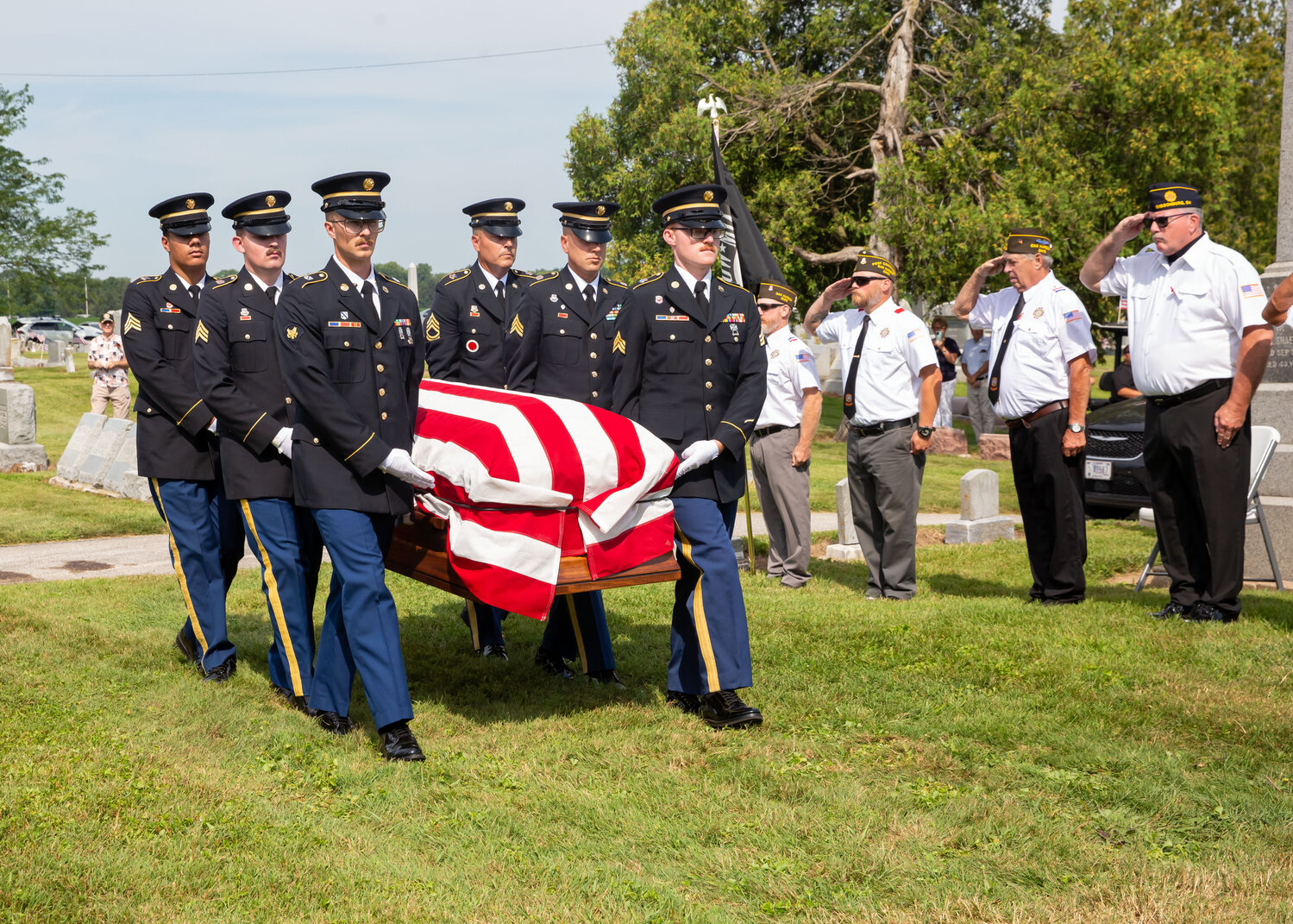


United States Army Sergeant, Howard L. Hasselkus, was captured and ultimately died as a prisoner of war during World War II at just 24 years old.
On Aug. 8, in what was the culmination of a long journey, Hasselkus was laid to rest at the Harris-Elmore Union Cemetery.
Hasselkus, who was born July 17, 1918 in Elmore, has a surviving half-sister Mary Lou Kruse of Elmore, and she attended his burial on Aug. 8.
Just two months earlier, on June 6, the Defense POW/MIA accounting agency reported that they had identified and accounted for Hasselkus, who was a native of Elmore.
In late 1941, Hasselkus was a member of the 192nd Tank Battalion when Japanese forces invaded the Philippine Islands in December. Intense fighting continued until the surrender of the Bataan Peninsula on April 9, 1942, and of Corregidor Island on May 6, 1942.
Thousands of U.S. and Filipino service members were captured and interned at POW camps.
Hasselkus was among those reported captured when U.S. forces in Bataan surrendered to the Japanese. They were subjected to the 65-mile Bataan Death March and then held at the Cabanatuan POW Camp #1.
More than 2,500 POWs perished in this camp during the war.
According to prison camp and other historical records, Hasselkus died Nov. 22, 1942 and was buried along with other deceased prisoners in the local Cabanatuan Camp Cemetery in Common Grave 807.
Following the war, American Graves Registration Service (AGRS) personnel exhumed those buried at the Cabanatuan cemetery and relocated the remains to a temporary U.S. military mausoleum near Manila.
In 1947, the AGRS examined the remains in an attempt to identify them. Three of the sets of remains from Common Grave 807 were identified, while the remaining nine were declared unidentifiable.
The unidentified remains were buried at the Manila American Cemetery and Memorial (MACM) as Unknowns.
In 2018, as part of the Cabanatuan Project, DPAA exhumed the remains associated with Common Grave 807 and sent them to the DPAA laboratory for analysis.
To identify Hasselkus’s remains, scientists from DPAA used dental and anthropological analysis, as well as circumstantial evidence.
Additionally, scientists from the Armed Forces Medical Examiner System used mitochondrial DNA, mitochondrial genome sequence, Y chromosome DNA (Y-STR), and autosomal DNA for analysis.
Although interred as an Unknown in MACM, Hasselkus’s grave was meticulously cared for over the past 70 years by the American Battle Monuments Commission.
Hasselkus is memorialized on the Walls of the Missing at the Manila American Cemetery and Memorial in the Philippines.
A rosette was placed next to his name to indicate he has been accounted for.


